Discover Austin
Join our tours and discover the hidden gems, rich history, and vibrant culture of our city!
About the guideOur tours

Walking tour of downtown Austin
We will stroll along the famous Congress Avenue, the city’s main street where the spirit of old Austin is still preserved. We will admire historic buildings and learn which of them are mentioned in O. Henry’s stories, pop into a bakery-museum, and visit the legendary Driskill Hotel — a true architectural masterpiece with ghosts and an amazing history.
You will love it:
- See, hear, and feel Austin as it was a hundred years ago.
- Do not forget to charge your phones — there will be plenty to photograph!
- After the tour, those who wish can have coffee and experience the atmosphere of the 19th century in a beautiful historic café at the hotel.
You will see:
Texas State Capitol Old Bakery and Emporium Millett Opera House Saint Mary's Cathedral Paramount Theatre Norwood Tower Angelina Eberly Statue The Driskill
The 1888 Capitol building towers over downtown Austin at the head of Congress Avenue. It is one of the tallest state capitols in the United States — taller even than the Capitol in Washington.
On Congress Avenue, just a stone's throw from the Capitol, stands the old bakery building. It was built back in 1876 for Swedish baker Charles Lundberg. Inside, elements of the original historic décor have been preserved.
Charles Millett's 1878 Opera House on Ninth Street was, at its opening, one of the largest performance halls in Texas — a full 800 seats! Though the stage is gone, the building survives to this day with minimal changes, and now belongs to the private Austin's Club.
Designed by Nicholas J. Clayton and completed in 1884, Saint Mary Cathedral is the mother church of the Catholic Diocese of Austin.
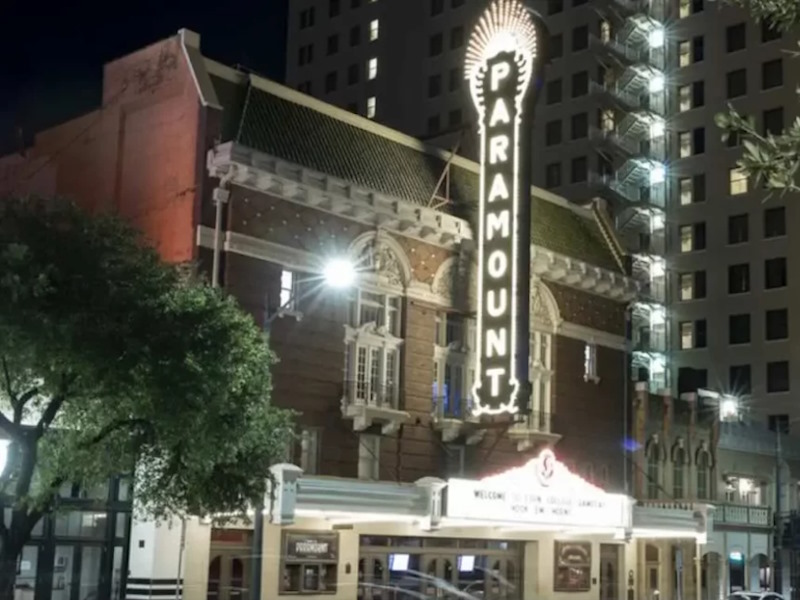
The 1915 Paramount Theatre on Congress Avenue is built in the Neoclassical style. Listed on the National Register of Historic Places, it has delighted audiences with vaudeville, film, and live performances for more than a century. Above the windows sit notable reliefs of theatrical masks.
Austin's only Neo-Gothic skyscraper was built in 1929 and partially rebuilt in 1983. It was a favorite building of President Lyndon Johnson's wife, Claudia "Lady Bird" Johnson; her daughters purchased the penthouse and still own it today.
Mystical Austin
An enchanting walk through downtown, filled with secrets and mysteries, mystical legends, and ghost stories.
You will love it:
- Walk along the streets where mysterious events took place.
- See buildings that may still be inhabited by ghosts today.
- Tickle your nerves with urban legends.
You will see:
The Driskill Paramount Theatre Millett Opera House TxDOT Headquarters General Land Office Building
The 1886 Driskill hotel, built in the Romanesque Revival style at the corner of 6th and Brazos, is the oldest operating hotel in Austin. Once famed as the finest hotel south of St. Louis, the Driskill remains one of the most legendary landmarks in Texas.
The 1915 Paramount Theatre on Congress Avenue is built in the Neoclassical style. Listed on the National Register of Historic Places, it has delighted audiences with vaudeville, film, and live performances for more than a century. Above the windows sit notable reliefs of theatrical masks.
Charles Millett's 1878 Opera House on Ninth Street was, at its opening, one of the largest performance halls in Texas — a full 800 seats! Though the stage is gone, the building survives to this day with minimal changes, and now belongs to the private Austin's Club.
Tour of downtown Georgetown
An engaging quest-tour for adults and children through the historic center of Georgetown — one of the most beautiful and cozy towns in Texas!
You will love it:
- Quest walk around Georgetown’s central square: we will solve the mysteries of the buildings standing on it, examine the architecture and sculptures, and get acquainted with the past of Texas.
- Coffee break in a cozy café.
- Tour of the Williamson Museum — the county’s history brought to life, interesting exhibits, and the atmosphere of the past.
- Suitable for adults and children 7+.
You will see:
The Williamson Museum Williamson County Courthouse Old Masonic Lodge Building City Post Georgetown Art Center Grace Heritage Center Southwestern University
The history of the county from its first settlers to the present day. The museum is housed in the former Farmers State Bank building on Georgetown's historic square.
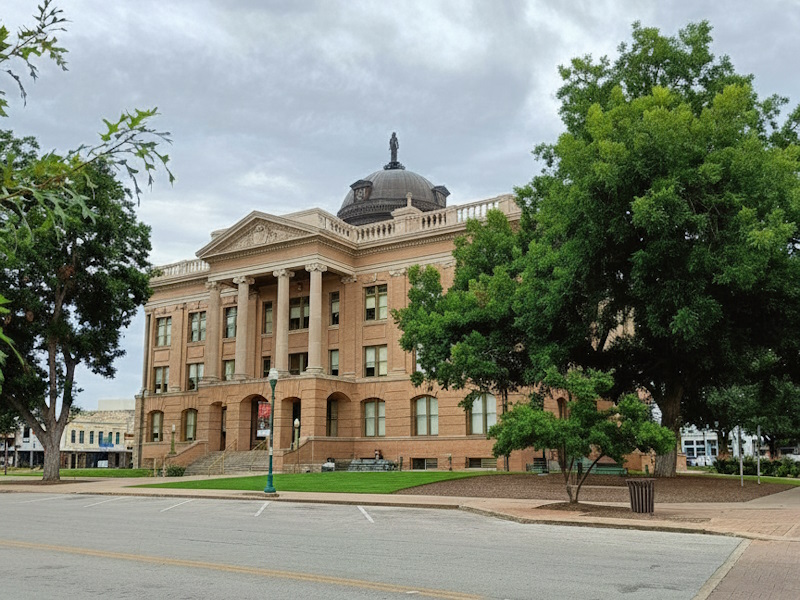
Built with Masonic funds in the Beaux-Arts style. It was here that one of Texas's most famous cases of a century ago was heard: the case of Dan Moody versus the Ku Klux Klan.
Built by Charles Belford in 1900 on commission from the San Gabriel Masonic Lodge. The building's most unusual feature is its decorative onion-shaped dome.
The building is constructed in a strict Neoclassical style. At various times it has housed both the federal post office and City Hall, and in 2021 the City Post Chophouse restaurant opened. Inside, the original finishes from its days as a post office have been preserved.
The old firehouse (circa 1892) has been rebuilt as an art center. Here local history meets contemporary art.
Round Rock: From the Wild West to the Paris Stage
Join me for a walk through historic downtown Round Rock — a place where Wild West history, local legends, and the lives of remarkable people still echo today. We’ll step back into the days of the Chisholm Trail, uncover the story of the legendary train robber Sam Bass, and visit his final resting place at Round Rock’s old cemetery. But the most unexpected chapter of all is still ahead of us: the story of Barbette (Vander Clyde Broadway), a Round Rock native who conquered the stages of New York and Paris, inspired Jean Cocteau, and linked a small Texas town to the world of art.
You will love it:
- Discover the unexpected stories of a small Texas town
- Experience the atmosphere of the real Wild West
- Hear about real people whose lives became part of local legend
- Learn how one person’s life connected Round Rock to 1920s Paris
You will see:
Chisholm Trail and Brushy Creek Round Rock City Hall Woodbine Mansion Round Rock Old Post Office Round Rock Cemetery and Sam Bass Gravesite
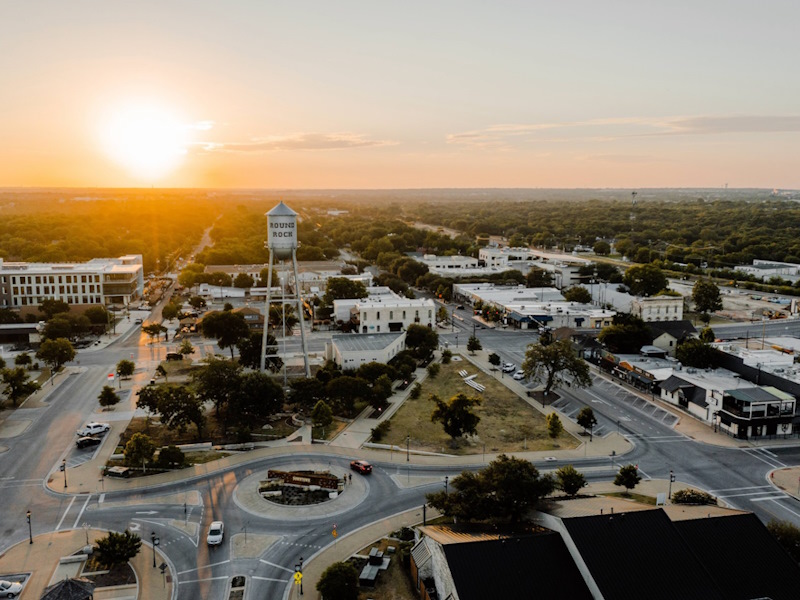
Round Rock grew up at a natural ford across Brushy Creek. Since a settlement named Brushy Creek already existed in Texas, the place was named for the round limestone rock lying in the creek nearby. That is how Round Rock got its name.
Round Rock City Hall stands in the heart of downtown, where limestone buildings form a historic district. It is the modern hub of one of the fastest-growing cities in the United States.
The Woodbine Mansion in Round Rock was built in 1895–1900 by the Page Brothers for a prosperous family of Swedish immigrants, and remodeled in 1931 in the Neoclassical style.
Tour of the Bremond district
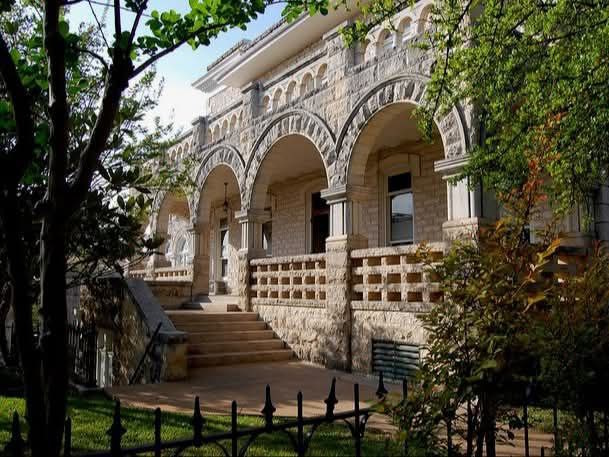
I invite you on a unique walk through the historic Bremond district in Austin — a charming neighborhood with Victorian houses from the late 19th century. You will see exquisite architecture: wrought-iron fences, carved decorations, and fairy-tale turrets.
You will love it:
- The beauty of late 19th‑century Victorian architecture.
- Fascinating stories of Austin families who left their mark in the heart of Austin.
- Touch the historical heritage and feel as if you are in a fairy tale.
You will see:
Austin History Center Wooldridge Square Travis County Courthouse Henry Hirshfeld Mansion Bremond Block Historic District John Bremond House Pierre Bremond House Eugene Bremond House North Cottage Chateau Bellevue
A 1933 building in the Neo-Renaissance style. Austin's former central library, today it holds the city's main archive: historical documents, photographs, and letters — witnesses to times gone by.
In 1909, through the efforts of Mayor Alexander Wooldridge, one of Austin's earliest squares was redeveloped as a park. The park's crown jewel is a charming gazebo-pergola in the Neoclassical style.
North of Wooldridge Square rises the Travis County Courthouse, built in the Art Deco style. The building's entrance is adorned with beautiful bas-reliefs.
Built in 1886 for a businessman, banker, and civic leader, it became a reflection of his life's success. Beside it survives an 1873 cottage that Hirshfeld built for his young family when he was still a small entrepreneur.
A jewel of Austin, an elite district of several generations of a single family of entrepreneurs and bankers. An ensemble of eleven Victorian homes built between 1850 and 1910 for the Bremond family.
The 1886 John Bremond House is the jewel of the Bremond Block, the most beautiful mansion in the Second French Empire style. Since 1969 it has housed the headquarters of the Texas Classroom Teachers Association.
Built in 1898, the Pierre Bremond House completed the formation of the Bremond family block. This home is built in a strict yet elegant Queen Anne style.
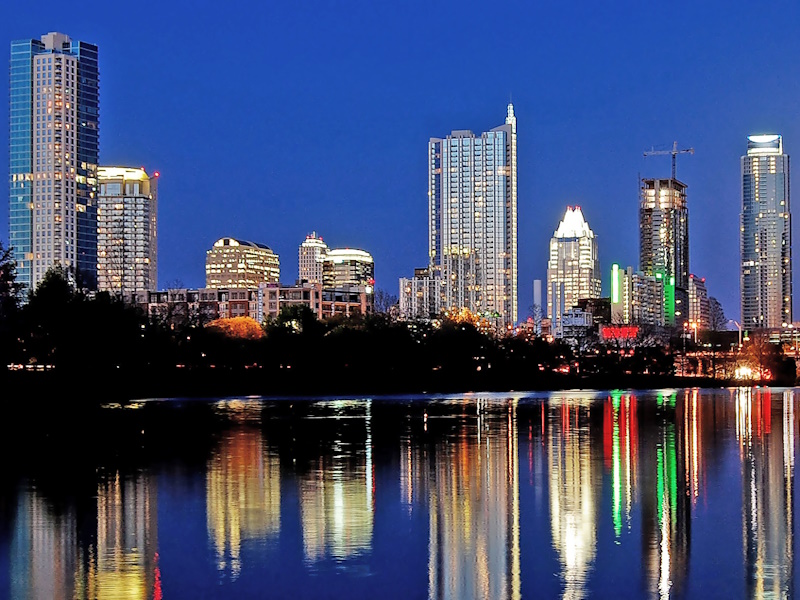
Weekend Austin-style
Spend an exciting weekend Austin-style! Day 1 — Historic Austin (4–5 hours): Walk through downtown, Congress Avenue and the pivotal events in the city’s life, Millett Opera House and the legend of Priscilla, The Driskill Hotel — architecture, symbols, and urban stories. Day 2 — Underground Texas: hidden history (4–6 hours): Caves of Central Texas — nature, origin, and context, Quest-walk through a historic town near Austin.
You will love it:
- You save time: all the best and most interesting in just 2 days.
- Individual format and comfortable pace, vivid lively stories, and details you will not find in guidebooks.
- Lunch and shopping like locals: cozy spots and unusual shops.
You will see:
Day 1
Texas State Capitol The Driskill Paramount Theatre Old Bakery and Emporium Millett Opera House Saint Mary's Cathedral Mayfield Park Covert Park at Mount Bonnell Ann W. Richards Congress Avenue Bat Bridge
The 1888 Capitol building towers over downtown Austin at the head of Congress Avenue. It is one of the tallest state capitols in the United States — taller even than the Capitol in Washington.
The 1886 Driskill hotel, built in the Romanesque Revival style at the corner of 6th and Brazos, is the oldest operating hotel in Austin. Once famed as the finest hotel south of St. Louis, the Driskill remains one of the most legendary landmarks in Texas.
The 1915 Paramount Theatre on Congress Avenue is built in the Neoclassical style. Listed on the National Register of Historic Places, it has delighted audiences with vaudeville, film, and live performances for more than a century. Above the windows sit notable reliefs of theatrical masks.
On Congress Avenue, just a stone's throw from the Capitol, stands the old bakery building. It was built back in 1876 for Swedish baker Charles Lundberg. Inside, elements of the original historic décor have been preserved.
Charles Millett's 1878 Opera House on Ninth Street was, at its opening, one of the largest performance halls in Texas — a full 800 seats! Though the stage is gone, the building survives to this day with minimal changes, and now belongs to the private Austin's Club.
Designed by Nicholas J. Clayton and completed in 1884, Saint Mary Cathedral is the mother church of the Catholic Diocese of Austin.
A fully restored 1870s cottage with terraced gardens, koi ponds, and a flock of free-roaming peacocks. A serene corner of old Austin.
Climb the limestone steps to the top of Mount Bonnell — one of the highest overlooks in Austin — and you'll be rewarded with wonderful views of a bend in the Colorado River and the downtown skyscrapers.
Every summer evening at sunset you can witness a mesmerizing sight: thousands upon thousands of bats stream out from beneath the bridge for their evening hunt. The world's largest urban colony of Mexican free-tailed bats took hold after the bridge's 1980 reconstruction, which created ideal conditions for roosting.
Day 2
The Williamson Museum Williamson County Courthouse Old Masonic Lodge Building Southwestern University Inner Space Cavern
The history of the county from its first settlers to the present day. The museum is housed in the former Farmers State Bank building on Georgetown's historic square.
Built with Masonic funds in the Beaux-Arts style. It was here that one of Texas's most famous cases of a century ago was heard: the case of Dan Moody versus the Ku Klux Klan.
Built by Charles Belford in 1900 on commission from the San Gabriel Masonic Lodge. The building's most unusual feature is its decorative onion-shaped dome.